
How to Mix In-House and Augmented Staff Without Breaking Your Workflow
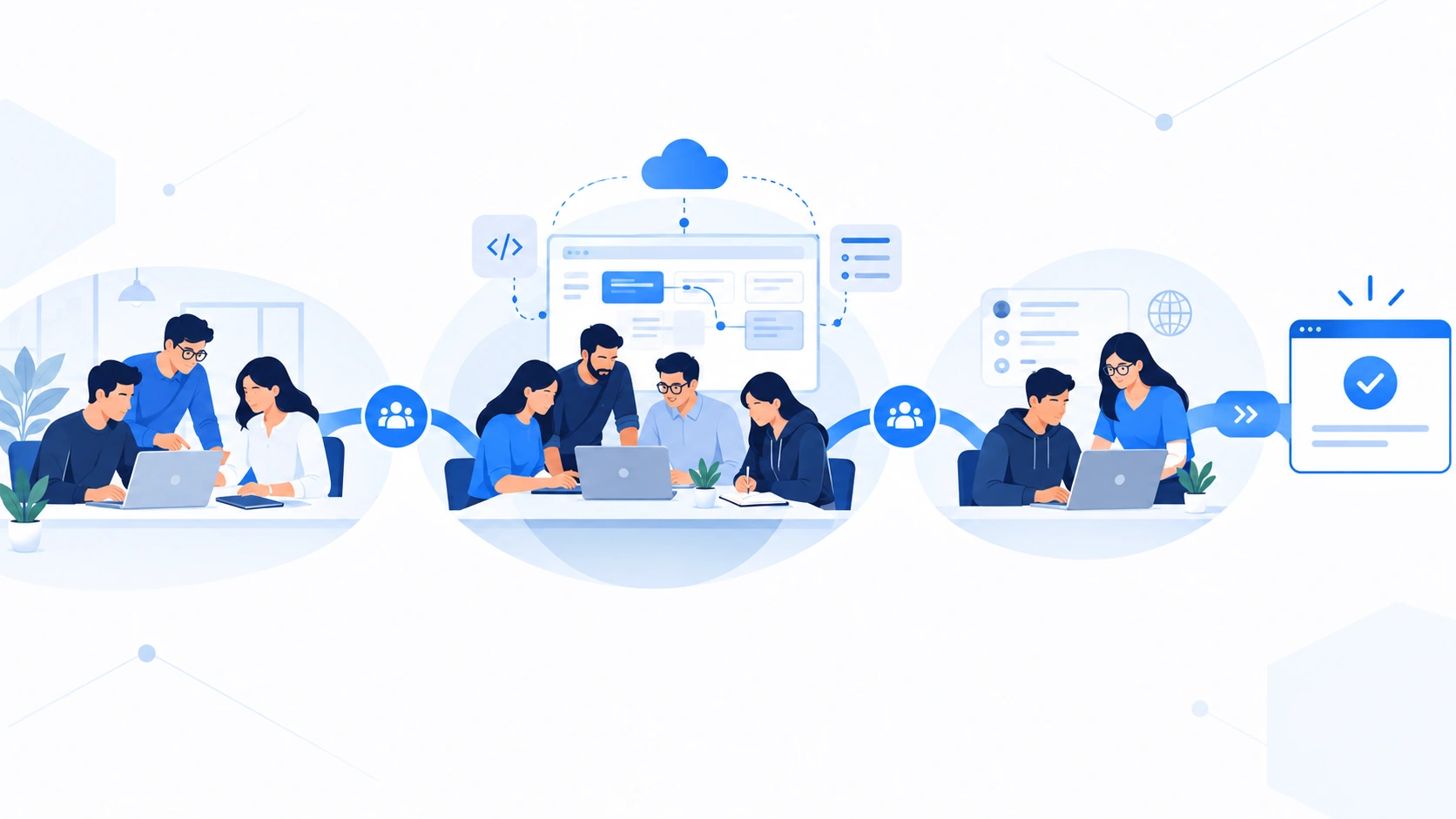
Selecting a technical team for your next project is rarely the problem. The question arises with the “integration” of experts. While the business case for IT staff augmentation is covered with speed to market, specialized skills, and cost flexibility, the operational execution is where most leading companies stumble. The moment you introduce external engineers into an established ecosystem, friction points emerge in your communication channel, code review process, and team culture.
To prevent disruptions in your delivery pipeline, you definitely need a deliberate framework for moving ahead. The guide covers the points that can aid your in-house team with augmented software experts and the mistakes that you must avoid while processing this integration.
Why Enterprises Combine In-House Talent With Staff Augmentation
Enterprises quickly move towards staff augmentation services when their internal team needs to add capacity or specialized expertise. One of the common scenarios is a sudden demand for technical resources for a short period. Hiring talented developers for a particular project increases execution capacity without permanently expanding every function.
Some of the other situations include adding particular expertise for projects. The business must have strong products and leadership in its internal team. But they sometimes need experts in areas such as cloud infrastructure, DevOps, cybersecurity, AI, or a specific development framework.
Team augmentation can also support modernization projects where internal engineers are still responsible for business context and product decisions while the external team contributes to implementation. The important consideration is how those roles fit together.
In-House Team vs. Augmented Staff
| Business Function | Typical Owner |
|---|---|
| Product strategy and roadmap | In-house leadership |
| Business and customer context | In-house team |
| Specialized engineering expertise | Augmented staff |
| Feature delivery during peak demand | Hybrid development team |
| Technical implementation | Shared, with defined ownership |
| Quality and release readiness | Shared engineering workflow |
This formation allows you to have leadership with a practical division of responsibility. Internal teams maintain strategic and business ownership while resource augmentation expands execution capacity within the existing delivery model.
Points to Consider While integrating In-House teams with Augmented Staff
Start With the Workflow Before Adding People
Before introducing specialized IT teams, look at how work is currently processed in organizations. Companies may put real effort into selecting developers while giving less focus to the processes those developers will enter. Even someone who has experience can lose time when the leadership is not clear or critical information is scattered across different systems. Also, pay extreme focus on clearly clarifying the IP ownership clauses or the other contracts that are mandated to ensure privacy.
Start by mapping the major stages of the delivery lifecycle.
Who prioritizes the backlog? Who approves architecture changes? Who reviews code? Who owns testing? Who signs off on releases? Who handles production incidents?
These questions establish the operating boundaries for the hybrid development team.
Map Ownership Across the Delivery Lifecycle
Clear leadership avoids small errors and delays.
Document responsibility for:
- Product needs and priority.
- Development and technical decisions
- Deployment and code reading
- Production support and incident escalation
The purpose of this is to create things simply, which helps to make your decision visible. An augmented developer must know where they can make a technical decision alone. When they need to discuss changes with the team and who provides final approval for changes affecting the wider product.
Document Workflow Dependencies
The development process cannot be moved in a straight line. Even a completed project requires a final check for code review, automated testing, and deployment approval before it reaches customers. Document these dependencies before onboarding new team members. At least include code review expectations, branching strategy, CI/CD requirements, QA process, release schedule, and escalation paths. This review process is important for remote engineering teams who work under different time zones and locations. Undocumented processes create waiting periods that can quickly affect delivery.
Updating the documentation workflow gives on-demand staff the ability to understand the context of project code. They need to move work forward without repeatedly relying on internal employees for basic clarification.
Create a Governance Model
When the team increases the division of responsibility for work, leadership must be distributed clearly. It helps to boost projects with code reviews; technical decisions and dependencies move through the same pipeline.
A business-effective governance model to help to avoid clutter and extra approvals. Start by defining who makes which decisions, especially with AI staff augmentation. Product priorities are generally controlled by internal leadership. Whether the development requirements can be based on engineering skills. Implemented features can be shared across the hybrid teams. Decisions related to security, infrastructure, and compliance should follow established enterprise controls.
The goal of this model is to provide access to engineers for doing work while maintaining clear boundaries around decisions that affect the wider organization.
Standardize Engineering Practices
Each one of them should work to the same standards of engineering, whether they are part of the internal workforce or brought in through specialized IT talent services.
That includes:
- Git and branching practices
- Pull request requirements
- Code review standards
- Automated testing
Consistency reduces errors, improves quality, and makes the entire software development team easier to manage.
Measure Workflow Health
Business leaders need clear growth and improvement in projects when the team works together. Multiple things to consider include cycle time, lead time for changes, deployment frequency, and blocked work.
These terms are used to understand workflow problems. Consider creating separate performance systems for internal and augmented employees.
Workflow Governance Checklist for Hybrid Development Teams
A simple governance framework can help leadership teams maintain consistency as the engineering organization expands.
| Workflow Area | Enterprise Best Practice |
|---|---|
| Onboarding | Provide documentation, access, and role expectations before the first sprint. |
| Communication | Keep internal and augmented staff within shared collaboration channels |
| Code reviews | Apply the same review standards across the team. |
| Knowledge sharing | Run architecture sessions, demos, and documentation updates regularly. |
| Security | Follow least-privilege access and established approval workflows. |
| Performance | Measure delivery at the team and workflow level. |
The value of this approach is operational clarity. Engineers know how work should move, managers can identify bottlenecks, and executives gain better visibility into delivery without creating another layer of bureaucracy.
Five Workflow Mistakes That Can Slow a Hybrid Team
Even well-planned staff augmentation initiatives can lose momentum when integration is treated as an afterthought.
1. Treating Augmented Staff as Ticket Executors
If external engineers receive isolated tasks without understanding the product roadmap or technical context, they have less opportunity to identify dependencies or suggest improvements.
Better approach: Include them in relevant planning and technical discussions.
2. Delaying Onboarding
Giving developers access to repositories, environments, and documentation after the sprint has already started creates avoidable downtime.
Better approach: Complete technical and process onboarding before development begins.
3. Creating Separate Communication Channels
Important decisions made in internal conversations can leave augmented staff working from outdated information.
Better approach: Keep project decisions and technical discussions in shared channels.
4. Leaving Ownership Unclear
When no one knows who approves a change or resolves a blocker, even a simple task can become a coordination exercise.
Better approach: Establish ownership for product, technical, security, deployment, and incident decisions.
5. Allowing Knowledge Silos
When critical product knowledge remains with a few internal employees, the team becomes dependent on individual availability.
Better approach: Use documentation, architecture walkthroughs, peer reviews, and regular knowledge-sharing sessions to distribute context.
Best Practices for Scaling a Hybrid Development Team
Once the operating model is established, consistency becomes the key to scaling it.
Keep onboarding repeatable. Create role-specific onboarding checklists so every new engineer receives the same essential product, technical, security, and workflow information.
Keep documentation current. Architecture and process documentation should evolve with the product. Outdated documentation can be almost as disruptive as having none.
Create regular knowledge-sharing opportunities. Architecture reviews, sprint demos, technical discussions, and retrospectives help internal and augmented engineers build a common understanding of the product.
Review workflow metrics regularly. Look for recurring blockers, slow approvals, review delays, or handoff problems. Fixing the process often improves capacity without adding more people.
When Staff Augmentation Becomes a Long-Term Enterprise Strategy
For some organizations, augmentation begins as a response to an immediate capacity gap and eventually becomes part of their broader workforce strategy.
This can happen when businesses operate multiple product lines, need specialized skills periodically, or have fluctuating engineering demand across different initiatives.
A mature model can give enterprises access to dedicated developers and specialized technical expertise while keeping strategic product ownership inside the organization.
It can also support global engineering operations, modernization programs, and periods of accelerated growth.
The important factor is operational maturity. As the model grows, organizations need clear governance, consistent onboarding, shared tooling, documented processes, and measurable delivery standards.
When those foundations are in place, adding external talent becomes an extension of the existing engineering system rather than a separate operating model.
Conclusion
The ratio of success in hybrid work can depend on the decision of hiring. Businesses focus on creating spaces wherein in-house teams and augmented developers can work together. Things to consider during hiring, like clear ownership, accessible documentation, clear communication, and measurable workflows, help to avoid errors or delays in projects later. When you fix these things before hiring the team, it helps you to add extra capacity and specialization to the project, which keeps delivery predictable.
FAQs
How to integrate an augmented team with in-house experts without disrupting workflow?
Start by identifying the gap or requirements, search for the right IT staff augmentation service provider, check their approach, set clear roles and responsibilities, manage collaborations, monitor, and optimize performance.
What are the benefits of integrating augmented staff with an in-house team?
Access to niche talent with specialized experts, faster development cycle, lower operational costs, full project control, and reduced hiring risk.
How to evaluate the success of mixing an in-house team with augmented staff?
Check KPIs (onboarding speed, code quality, or work quality), evaluate collaboration or integration metrics, and assess whether project deadlines are met faster.
How can I ensure code security and IP protection when integrating augmented staff with an in-house team?
Require all augmented personnel to sign Non-Disclosure Agreements (NDAs), IP assignment contracts, and data compliance agreements before granting access to your repositories.